


Natural vs Chemical Skincare: What’s Safer? Benefits, Risks, and Smart Choices for Healthy Skin
-
Jee mem
- Posted on
- 0 comments
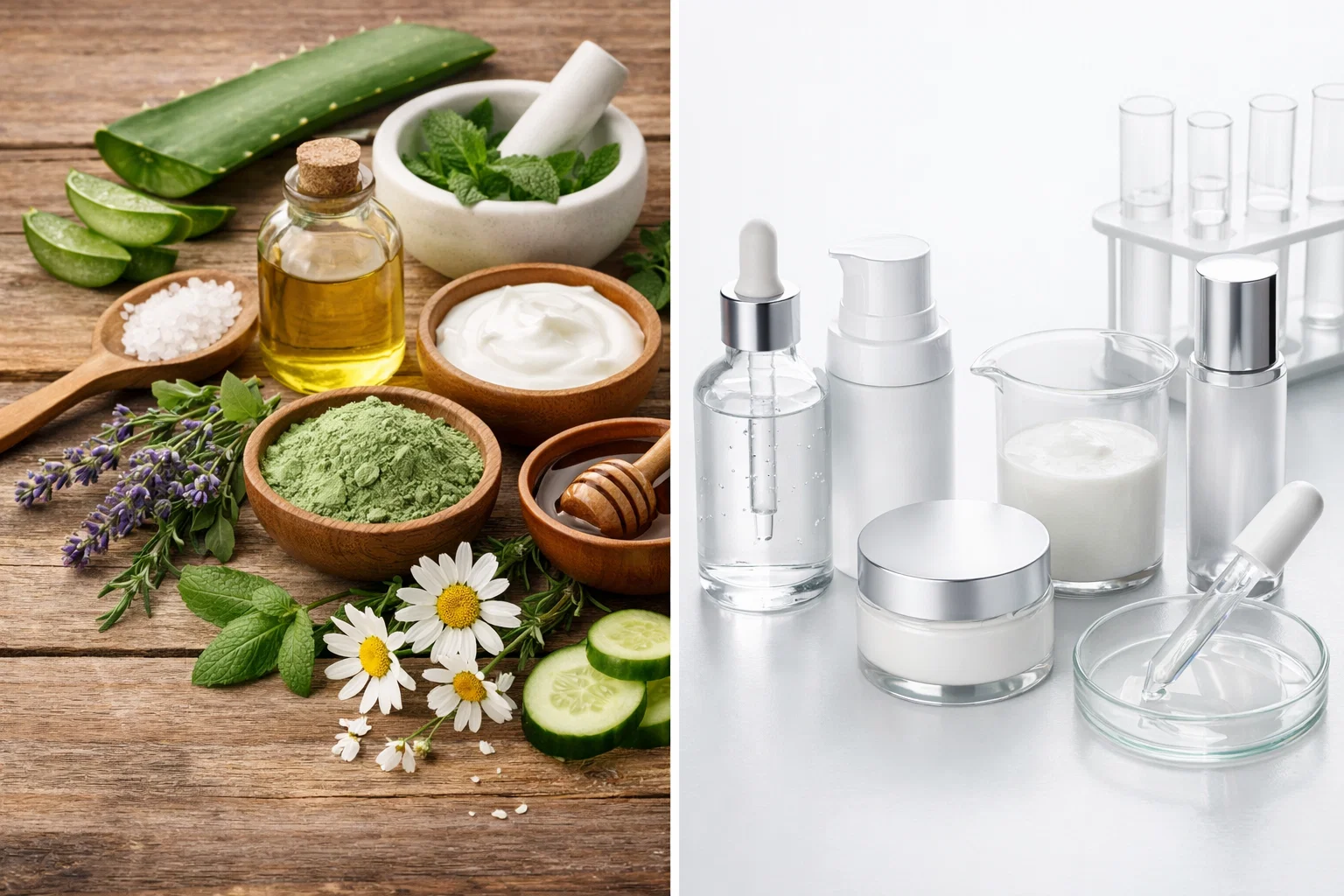
Natural vs chemical skincare is one of the most confusing topics for beginners today. Walk into any store or scroll online, and you’ll see products claiming to be natural, chemical-free, clean, or dermatologist approved. But what do these labels really mean? And more importantly—what is actually safer for your skin?
Many men and women struggle with issues like irritation, acne, dryness, or sudden breakouts after using skincare products. Often, the problem isn’t the skin—it’s the ingredients. Some people swear by natural remedies like aloe vera and oils, while others trust lab-made formulas for faster results.
The truth lies somewhere in between.
Understanding the difference between natural and chemical skincare helps you make informed, healthy decisions—especially if you’re a beginner, a product buyer, or someone with sensitive skin. This guide breaks everything down in simple, honest language. No fear-mongering. No confusing science.
By the end, you’ll clearly understand benefits, safety, side effects, and how to choose safe skincare products that actually work for your lifestyle.
Table of Contents
- What Is Natural Skincare?
- What Is Chemical Skincare?
- Natural Skincare Products and Remedies Explained
- How Natural vs Chemical Skincare Works on the Skin
- Key Health Benefits of Natural vs Chemical Skincare
- Real-Life Uses & Practical Examples
- Myths vs Facts About Skincare
- How to Use Skincare Products Safely
- Side Effects & Safety Information
- Frequently Asked Questions (FAQ)
- Final Conclusion
Natural Skincare Products, Remedies, and Chemical Ingredients Explained

Natural Skincare Products
Extracts, herbs, oils, clays, and minerals form the foundation of many traditional beauty practices. These ingredients are usually sourced from plants or natural elements and processed with minimal refinement. Because of this, they are often preferred by people who want a gentler approach when comparing natural vs chemical skincare options.
For centuries, different cultures have relied on natural skincare remedies to cleanse, heal, and protect the skin. Long before modern cosmetic labs existed, people used what was locally available—plants, flowers, and earth-based materials—to maintain healthy skin. Even today, many of these ingredients are commonly recommended for beginners and those with sensitive skin because they support the skin’s natural balance rather than forcing quick changes.
Aloe vera gel is widely known for its soothing and hydrating properties. It is traditionally used to calm sun-exposed or irritated skin and is suitable for daily use in natural skincare routines.
Coconut oil has been used as a natural moisturizer and cleanser in many regions. It helps lock in moisture and is often included in discussions around natural vs chemical skincare for dry or damaged skin types.
Rose water is valued for its refreshing and toning effect. Traditionally used as a natural skin mist, it helps cleanse gently while adding light hydration without heaviness.
Turmeric has a long history in beauty rituals, especially in natural skin care remedies for improving skin clarity and maintaining an even-looking tone. It is often used in small amounts in face packs.
Honey is naturally nourishing and has been traditionally applied to support skin softness and hydration. It is especially popular in DIY natural skincare for dull or tired-looking skin.
Together, these ingredients highlight why many people lean toward natural options when exploring natural vs chemical skincare. While they may work more slowly than chemical formulations, they focus on long-term skin comfort, safety, and balance—making them a trusted choice across generations.
Natural Skin Care Remedies
Natural skin care remedies usually involve DIY or minimal-processing methods. Think face packs made at home, herbal pastes, or natural oils applied directly to the skin. These remedies often use easily available ingredients and focus on supporting the skin’s natural healing process rather than forcing quick changes.
Because they contain fewer additives, natural skin care remedies are commonly chosen for their gentle nature and lower risk of harsh reactions. Many people exploring natural vs chemical skincare prefer these methods when dealing with mild concerns like dryness, dullness, or temporary irritation. They are also popular among beginners who want a simple, affordable, and more mindful skincare routine.
However, results from natural remedies may take time and consistency. When used correctly and in moderation, they can become a helpful part of a balanced skincare approach focused on long-term skin comfort and safety.
Skin Care Remedies (General Use)
Skin care remedies include both natural and chemical solutions, depending on the skin concern and individual needs. A remedy can be as simple as applying fresh aloe vera to soothe the skin or as complex as using a professionally formulated cream with targeted active ingredients.
Natural remedies often focus on nourishing and calming the skin over time, while chemical-based solutions are designed to address specific concerns such as acne, pigmentation, or early signs of aging. When comparing natural vs chemical skincare, the key difference lies in how quickly results appear and how the skin responds.
Choosing the right skin care remedy depends on factors like skin type, sensitivity, lifestyle, and consistency of use. In many cases, a balanced approach—combining gentle natural remedies with well-formulated chemical products—can help maintain healthy, comfortable, and well-supported skin.
Aloe Vera and Skin Care
Aloe vera is one of the most trusted natural ingredients in skincare. It is commonly recommended for soothing, hydration, and calming irritated or stressed skin. Because of its lightweight and cooling feel, aloe vera suits most skin types, including sensitive and acne-prone skin.
Traditionally used in home remedies, aloe vera helps support the skin’s natural moisture balance without making it feel heavy or greasy. Many natural skincare products use aloe as a base because of its gentle nature and easy absorption. In discussions around natural vs chemical skincare, aloe vera is often highlighted as a beginner-friendly ingredient that provides comfort and care with regular use.
When used consistently, aloe vera can become a simple yet effective part of a daily skincare routine focused on maintaining healthy-looking, refreshed skin.
Chemical on Skin: What It Really Means
The word “chemical” often sounds scary, but technically, everything is a chemical—including water and natural ingredients. In skincare, chemical products usually contain lab-created ingredients that are carefully designed for stability, longer shelf life, and targeted results such as acne control, sun protection, or skin brightening.
Not all chemicals are bad or unsafe. In fact, many are research-backed and commonly recommended by skincare professionals when used correctly. The real issue lies in how strong the ingredients are, how frequently they are applied, and whether they suit your individual skin type. Overuse or incorrect layering can sometimes lead to irritation, especially for sensitive skin.
When comparing natural vs chemical skincare, it’s important to understand that chemical skincare is not about harm, but about precision. Choosing the right formulation, following instructions, and listening to your skin helps ensure safety while achieving effective results

How Natural vs Chemical Skincare Works on the Skin
Skincare products mainly work on the outer layer of the skin, where protection and moisture balance are most important. Natural skincare tends to support the skin’s natural barrier by providing gentle nourishment and long-lasting hydration. Ingredients from plants, oils, and minerals help the skin maintain comfort and balance over time.
Chemical skincare products often work faster because they are specially formulated to target specific concerns such as acne, pigmentation, uneven texture, or early signs of aging. These formulas are research-backed and designed to deliver consistent, visible results when used as directed. Because of their focused action, they may require careful use, especially for sensitive skin.
Natural skincare usually works gradually and gently, making it suitable for daily maintenance and long-term skin health.
Chemical skincare works more directly and quickly, which can be helpful for treating specific skin issues.
Neither approach is universally “better.” When choosing between natural vs chemical skincare, effectiveness depends on several factors, including:
- Skin type
- Sensitivity level
- Lifestyle and environment
- Consistency of use
Many people find the best results by combining both approaches—using natural products for daily care and chemical formulations when targeted treatment is needed.
Key Health Benefits of Natural vs Chemical Skincare
1. Natural Skincare Safety for Daily Use
Natural skincare safety is one of its biggest benefits. Products with fewer synthetic ingredients are often better tolerated by sensitive skin.
They are commonly chosen by:
- People with allergies
- Pregnant women (with guidance)
- Those preferring minimalist routines
2. Natural Skincare for Sensitive Skin
Natural skincare for sensitive skin focuses on calming rather than correcting. Ingredients like aloe vera, chamomile, and oils help maintain balance without overwhelming the skin.
3. Targeted Results with Chemical Skincare
Chemical skincare products are formulated to address specific problems. Acne treatments, sunscreens, and anti-aging products often rely on chemical actives for effectiveness.
When used correctly, they are safe skincare products for many users.
4. Clean Beauty vs Chemical Skincare Balanc
Clean beauty vs chemical skincare is not about choosing sides. Clean beauty focuses on ingredient transparency, while chemical skincare focuses on performance.
The best routines often combine both.
5. Longer Shelf Life and Stabilit
Chemical skincare products usually last longer and remain stable in different climates. Natural products may spoil faster if not preserved properly.
Real-Life Uses & Practical Examples
Office Workers
Office workers are often exposed to air conditioning, long screen time, and indoor pollution, which can lead to dry, tired-looking skin. In such cases, a gentle cleanser helps remove dirt without stripping moisture. Using natural moisturizers during the day supports hydration, while chemical-based sunscreens provide reliable protection from UV exposure during commutes. This balanced approach shows how natural vs chemical skincare can work together for daily comfort and skin protection.
Men
Men often prefer skincare routines that are simple and easy to follow. A natural face wash helps cleanse the skin gently, especially after shaving, while a chemical sunscreen offers effective sun protection with minimal effort. Combining both options allows men to maintain healthy skin without spending too much time, making natural vs chemical skincare a practical choice.
Women
Women may experience skin changes due to hormones, stress, or lifestyle factors. During such times, switching between natural skincare remedies and targeted chemical products can be helpful. Natural products support skin balance, while chemical formulations address specific concerns like breakouts or uneven tone. This flexible approach highlights the benefits of understanding natural vs chemical skincare.
Seniors
As skin matures, it often becomes drier and more delicate. Seniors benefit from nourishing natural oils that provide comfort and moisture, along with mild chemical formulations designed for aging skin. When chosen carefully, these products help maintain softness and hydration without irritation, supporting long-term skin health.
Daily Lifestyle Use
For everyday skincare, a mixed routine is practical, affordable, and sustainable. Using natural products for daily care and chemical skincare for targeted needs allows people to adapt their routine as their skin changes. This balanced use of natural vs chemical skincare supports healthy skin without unnecessary complexity.
Myths vs Facts About Natural vs Chemical Skincare
Myth 1: Natural Skincare Is Always Safe
Fact: Some natural ingredients can still cause irritation or allergies.
Myth 2: Chemical Skincare Is Harmful
Fact: Many chemical products are tested, regulated, and safe when used correctly.
Myth 3: Natural Products Don’t Work
Fact: Natural skincare works gradually and supports long-term skin health.
Myth 4: DIY Is Always Better
Fact: Improper DIY mixtures can damage skin if not used carefully.
Myth 5: Expensive Means Safer
Fact: Safety depends on ingredients, not price.
How to Use & Recommended Usage
Best Time to Apply
- Morning: Cleanse + moisturize + sunscreen
- Night: Cleanse + repair products
Daily Usage Tips
- Patch test new products
- Introduce one product at a time
- Follow label instructions
Safety Disclaimer
This content is for general information only. Individual skin responses may vary. Consult a qualified professional for personalized advice.
Side Effects & Safety Informati
Mild Side Effects
- Temporary redness
- Tingling sensation
- Mild dryness
Who Should Be Careful
- People with chronic skin conditions
- Those with known allergies
- Children and elderly users
Choosing safe skincare products means listening to your skin and adjusting accordingly.
Frequently Asked Questions (FAQ)
1. Natural vs chemical skincare vs organic skincare—what’s the difference?
Natural focuses on ingredients, chemical focuses on formulation, and organic refers to farming methods.
2. Are natural ingredients better for your skin?
Natural ingredients can be gentler, but effectiveness depends on skin type and usage.
3. Is natural skincare good for oily skin?
Yes, lightweight natural skincare for oily skin can help balance oil production.
4. Can men follow a natural skincare routine?
Absolutely. Men skincare routine natural options are simple and effective.
5. What are common DIY skincare ingredients?
Honey, aloe vera, turmeric, yogurt, and oils are popular DIY skincare ingredients.
6. Is chemical skincare unsafe long term?
Not necessarily. When used as directed, many chemical products are research-backed and safe.
7. What is the best natural night skin care routine?
Gentle cleansing, aloe vera or oil, and proper sleep support skin repair.
8. Can I mix natural and chemical skincare?
Yes. Many people successfully combine both for balanced care.
Final Conclusion
Natural vs chemical skincare is not about choosing a winner—it’s about choosing what works best for your skin. Natural skincare offers gentle, traditionally used support, while chemical skincare provides targeted, research-backed solutions for specific concerns.
Understanding ingredients, listening to your skin, and avoiding extremes helps you build a safe and effective routine. Whether you’re a beginner, a product buyer, or simply aiming for healthier skin, informed choices always lead to better results.
Take your time, read labels carefully, and choose safe skincare products that support long-term skin health rather than quick fixes.
✨ Healthy skin is a journey, not a trend.


